
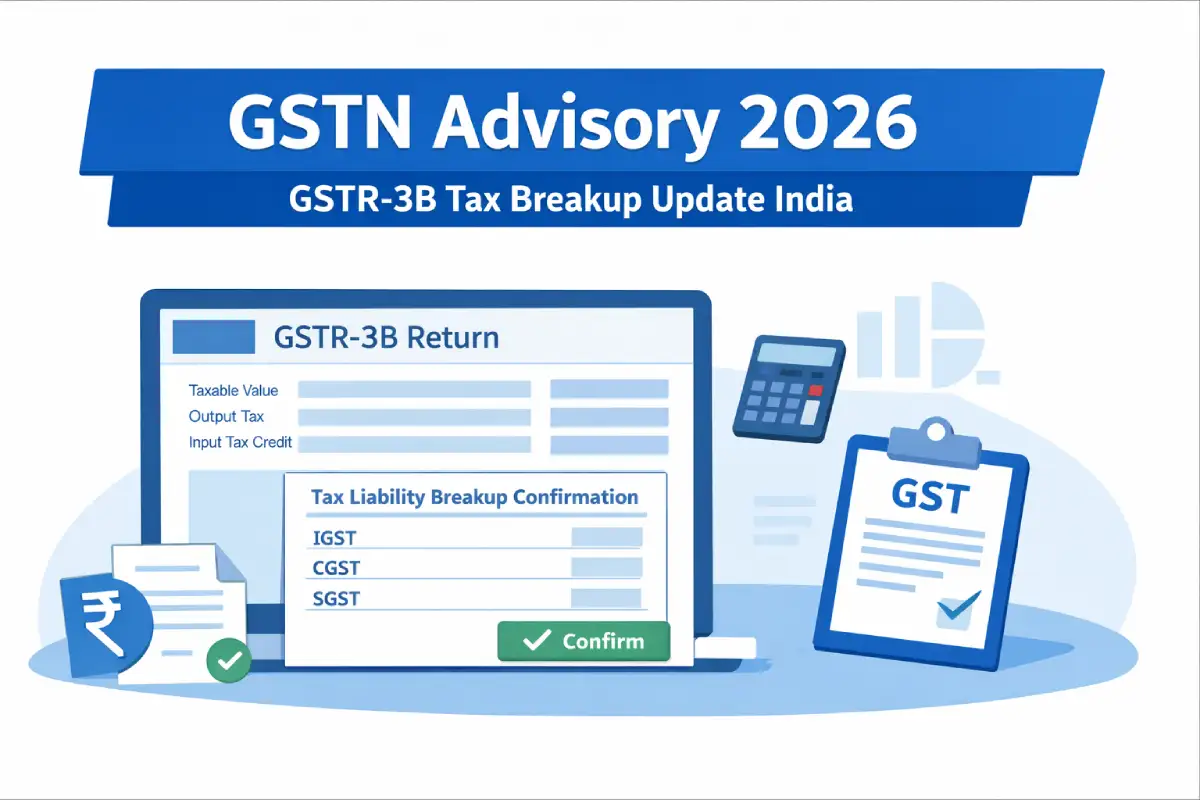
The GSTN advisory 2026 introduces a significant update for taxpayers filing their GSTR-3B returns. Starting from the February 2026 tax period, businesses will be required to confirm the tax liability breakup before submitting their returns. This step has been added to improve the accuracy of tax reporting and reduce common filing errors.
As GST compliance continues to evolve, such updates aim to make the system more transparent and reliable. The advisory encourages taxpayers to review their tax details carefully, ensuring that all figures are correct before final submission and helping avoid future discrepancies or notices.
GSTN Advisory 2026: Key Update Explained
The GSTN advisory 2026 mandates that taxpayers must confirm the detailed breakup of their tax liability in GSTR-3B. This includes verifying components such as IGST, CGST, and SGST before completing the filing process.
For reference, taxpayers can also review the official Goods and Services Tax Network guidelines to understand how this update fits into the overall compliance framework.
What this change includes:
- A mandatory confirmation step before submission
- Detailed review of tax components
- Increased accountability during filing
- Applicability from February 2026 onwards
What is the Impact of GSTR-3B Filing Changes?
The introduction of GSTR-3B filing changes is aimed at minimizing errors that often occur due to incomplete verification. In the past, many taxpayers submitted returns without reviewing the detailed tax structure.
With this update:
- Filing becomes more accurate
- Risk of mismatches is reduced
- Corrections and notices may decrease
Understanding Tax Liability Breakup in GST
The term tax liability breakup GST refers to dividing the total tax payable into different components such as central, state, and integrated taxes. This breakdown ensures that taxes are properly allocated and reported.
Importance of correct breakup:
- Ensures accurate tax payment
- Helps in return matching and reconciliation
- Reduces compliance risks
Updated GSTR-3B Filing Process
The revised GSTR-3B filing process now includes an additional step that requires taxpayers to confirm their liability details before submission. This ensures that users take responsibility for verifying the data entered.
Steps to follow:
- Enter outward and inward supply details
- Review system-calculated tax liability
- Check the breakup carefully
- Confirm and proceed to file
This simple addition improves overall compliance and reduces the chances of incorrect filings.
GST Update Today: Why It Matters?
This GST update today highlights the importance of accuracy in tax reporting. While the change may appear procedural, it reflects a broader effort to strengthen the GST system.
Businesses should focus on:
- Maintaining accurate records
- Reviewing entries before submission
- Training staff involved in GST filing
Adapting early to such updates can help businesses avoid last-minute challenges.
Practical Tips for Smooth Compliance
To ensure hassle-free filing under the new rule, taxpayers can follow these practical steps:
- Reconcile data before starting the return
- Keep all invoices organized
- Avoid rushing during filing
- Double-check all entries carefully
These habits can significantly improve filing accuracy and reduce compliance risks.
Staying Updated with GST Changes
Understanding updates like the GSTN advisory 2026 is essential for maintaining compliance in a dynamic tax environment. Regularly reviewing changes and adapting processes accordingly can help businesses operate smoothly and avoid unnecessary complications.
Important Faqs on GSTN Advisory 2026
Q1. What is the GSTN advisory 2026 about?
It requires taxpayers to confirm the tax liability breakup in GSTR-3B before filing, ensuring accurate reporting and reducing errors.
Q2. When does this new rule apply?
The rule is applicable from the February 2026 tax period for all taxpayers filing GSTR-3B returns.
Q3. Why is confirming tax liability important?
It helps ensure correct tax reporting, reduces mismatches, and minimizes the chances of receiving notices from authorities.